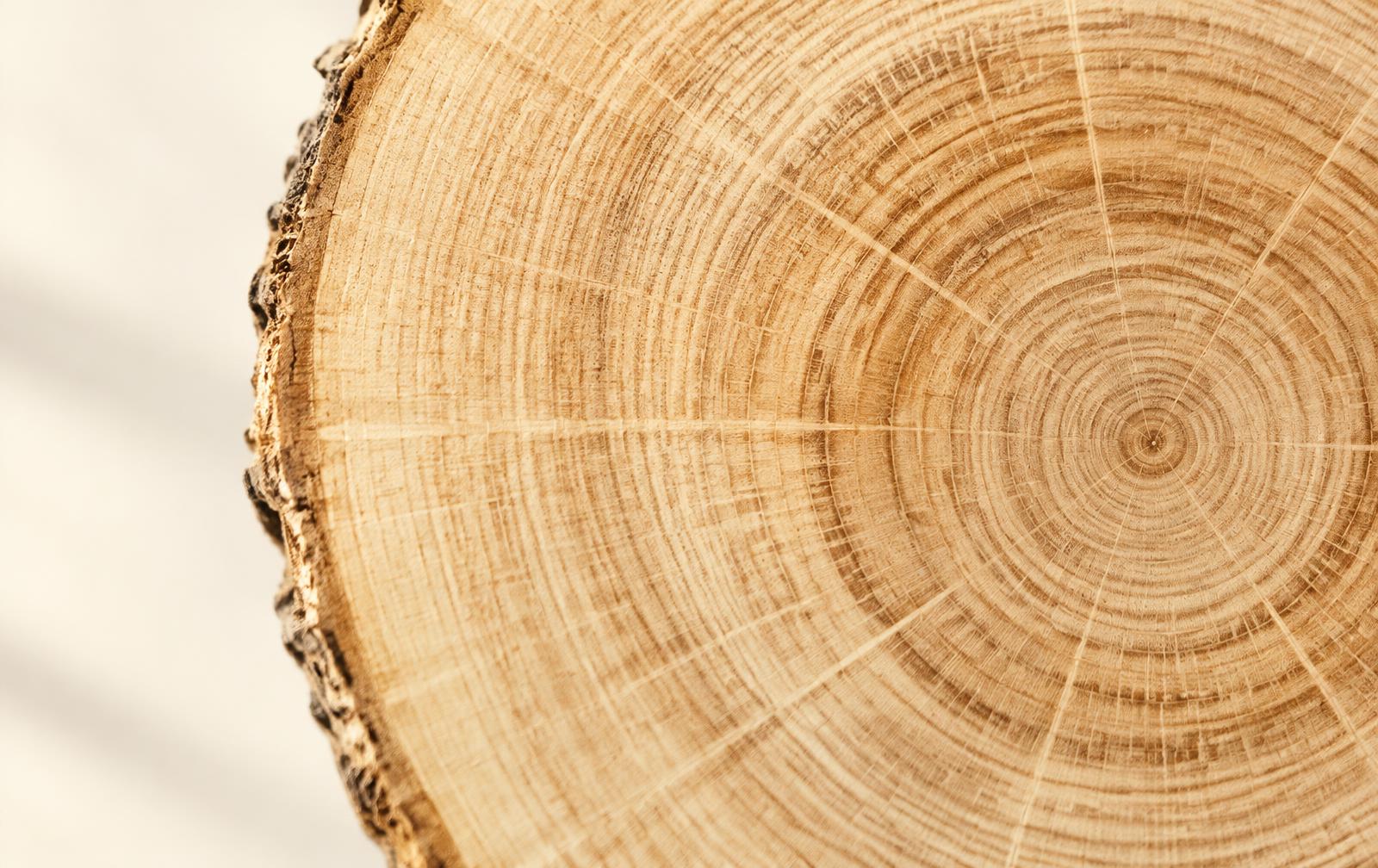
Date the timber.
Defend the date.
Cross-dating, felling estimates, radiocarbon anchors and provenance in one workbench — with every statistic corrected for multiple comparisons and every report reproducible from its data.
Smart Tree-Ring Analytics: Tracing Time Through Wood
One instrument, four kinds of evidence
Building archaeologists
Date roof trusses, bell frames and floor joists, group timbers into felling phases and read the building's construction sequence.
Heritage surveyors
Issue dossiers structured for Historic England, the Landesämter für Denkmalpflege and DRAC, with felling dates and terminus post quem kept distinct.
Fine-art appraisers
Date oak panel paintings and furniture, estimate the earliest use date after seasoning and screen Baltic export provenance.
Timber compliance
Test a declared harvest date and origin against the wood itself, and assemble EUDR due diligence with geolocation and evidence.
From core sample to signed dossier
Acquire & Measure
- Field modePhone or tablet capture in trench, belfry or cellar, with blur, skew and scale checks before you leave site.
- Measurement labMeasure rings from calibrated photographs: auto-snapping, multi-ray consensus, earlywood/latewood and Blue Intensity.
- Micro-CT coring
- SpecimensIngest Tucson, Heidelberg, CooRecorder, TRiDaS, CSV and JSON; record sapwood, waney edge and find spot.
Analysis & Dating
- Cross-dateSplit-screen scrubber with live t_BP, t_H, Gleichläufigkeit and Benjamini–Hochberg q at every position.
- Quality controlCOFECHA-style segment checks that flag missing and false rings, with undoable analyst-confirmed fixes.
- ¹⁴C wiggle-matchBayesian wiggle-matching on IntCal20 and single-year Miyake anchors for floating sequences.
Synthesis & Provenance
- Site masterN × N correlation matrix, felling batches, site master and architectural phase timeline.
- ProvenanceWhich reference network does the growth signal resemble — with trade corridors and Sr screening.
- EUDR due diligenceGeolocation, species screening, dendro felling-date checks and risk assessment for EUDR due diligence.
Data & Reporting
- Reference libraryBundled open masters with EPS, live NOAA ITRDB and DCCD search, and an encrypted private vault.
- Case hubOne building project, many timbers, one archival dossier for Historic England, Denkmalpflege or DRAC.
- Specimen dossierSingle-specimen dating report with curves, statistics, felling range and sign-off.
- MethodologyEvery formula, threshold, dataset and validation claim, versioned and citable.
- Validation lab
Published methods, stated limits
Established statistics
Baillie–Pilcher and Hollstein t, Gleichläufigkeit with significance, correlation and overlap — the measures Central European and British laboratories report.
Multiple-comparison control
Sliding a series tests hundreds of positions; every match carries a Benjamini–Hochberg q-value, never a raw p alone.
Replication you can see
EPS, sample depth and subsample signal strength on every master; exploratory periods are flagged in the scrubber and the dossier.
Independent audit
Export a standalone R script with the data and standard dplR calls, so a reviewer can recompute t_BP, t_H and Glk outside Dendrotrace.
Felling dates with confidence
Sapwood models give 95% felling ranges; waney edge gives the year and season; heartwood-only gives a terminus post quem — never confused.
No machine learning
Every output is a deterministic function of the measurements and the chosen reference. Built-in demo data is synthetic and labelled so.
Your data stays on your device
No account and no upload. Measurements, cases and shipments are kept in your browser; photographs and evidence files are identified by their SHA-256 only. Private reference chronologies are encrypted on the device and matched locally.
Try it with the built-in demo data
Sample specimens, a twelve-timber cathedral survey and EUDR shipments load in one click. All demo data is synthetic.